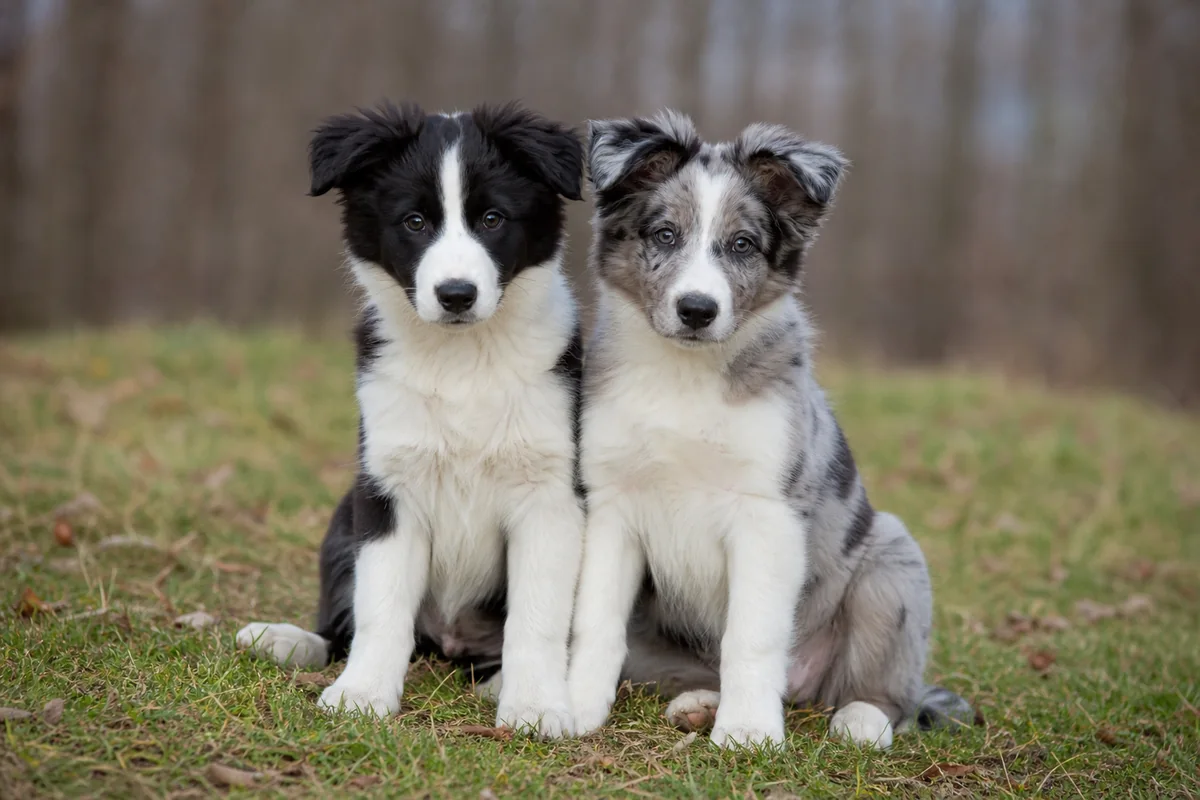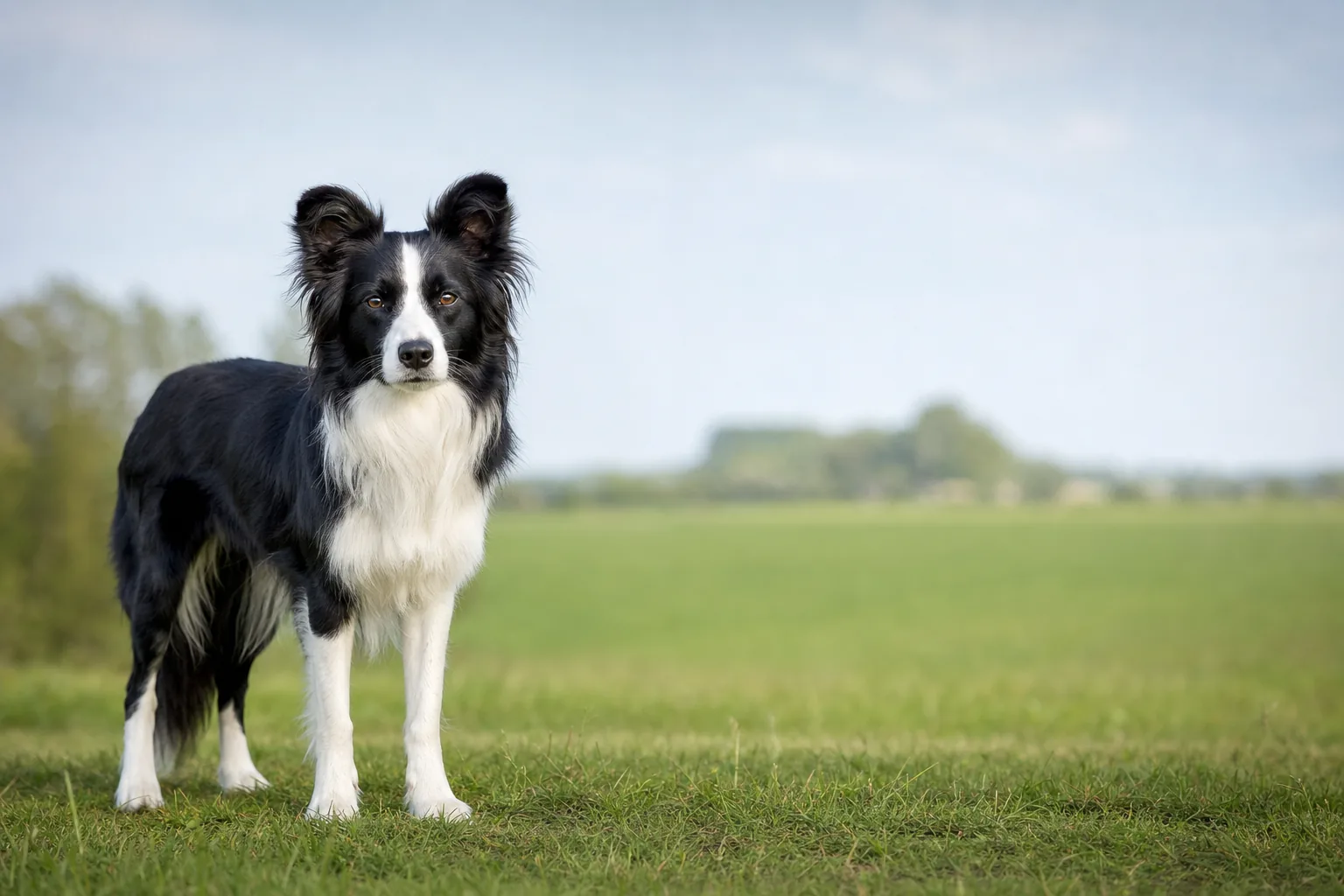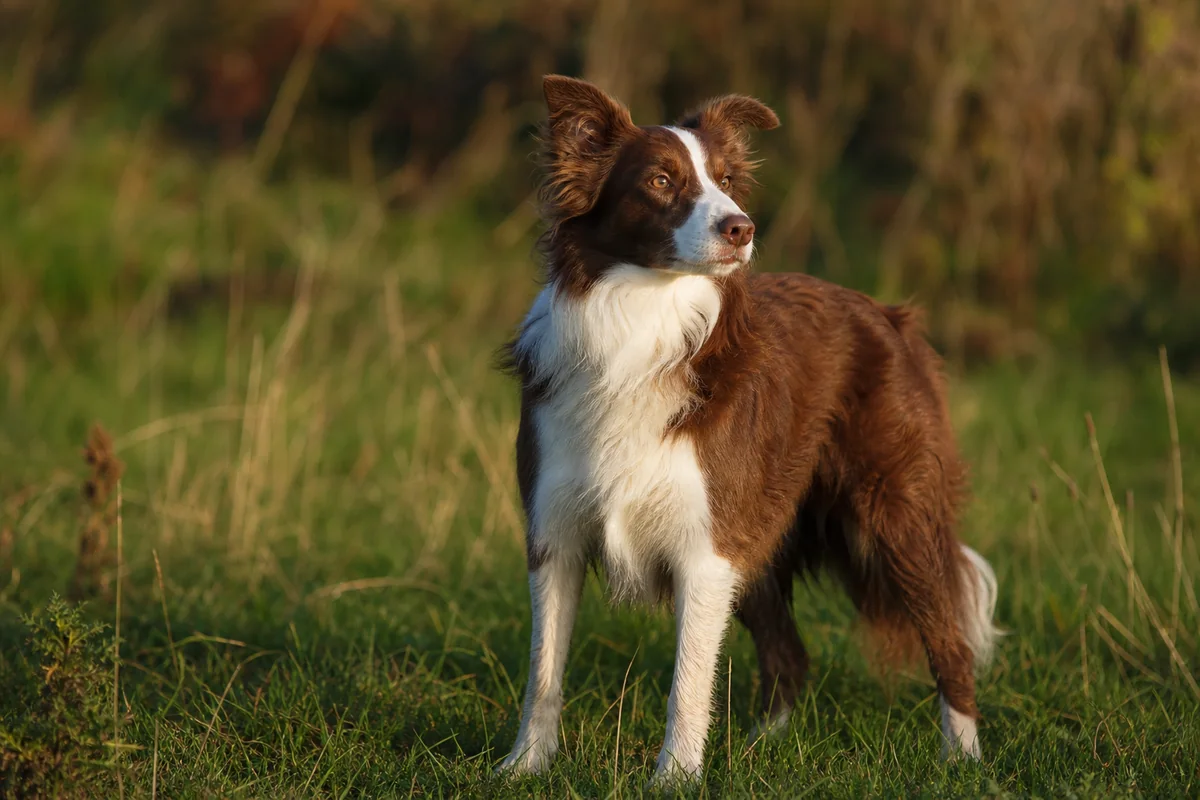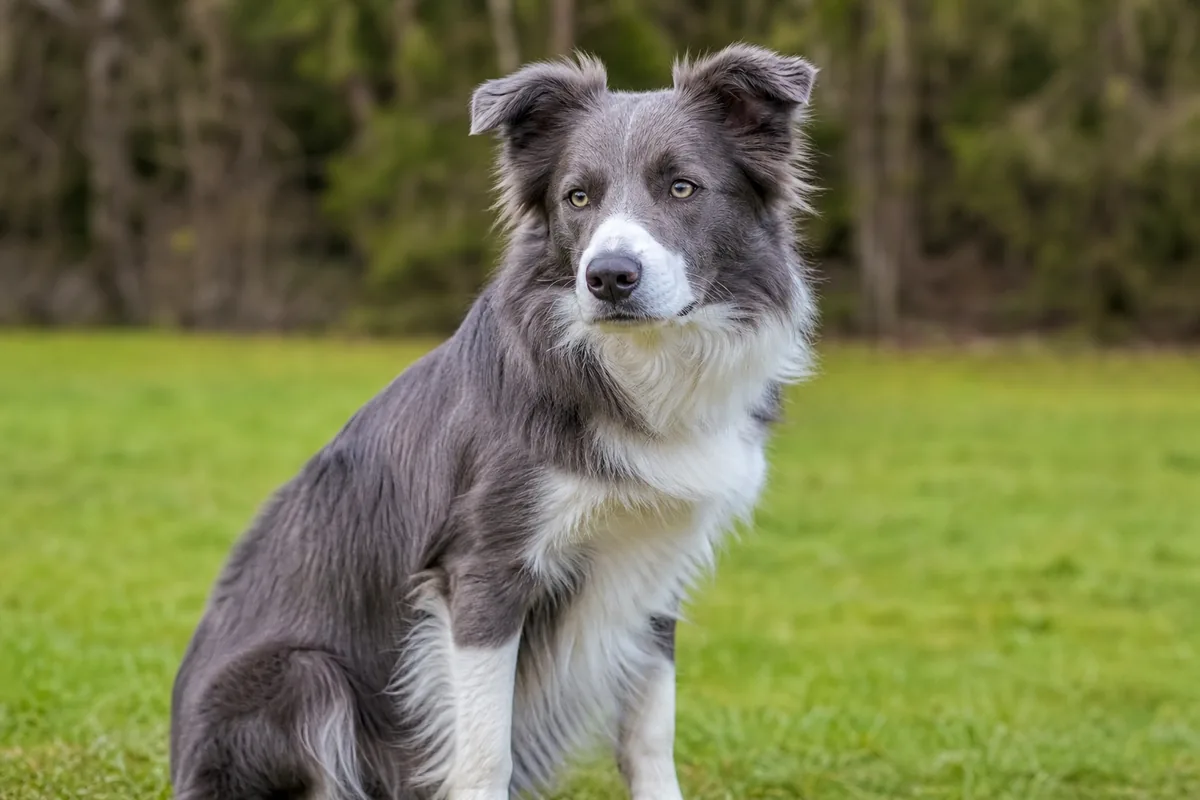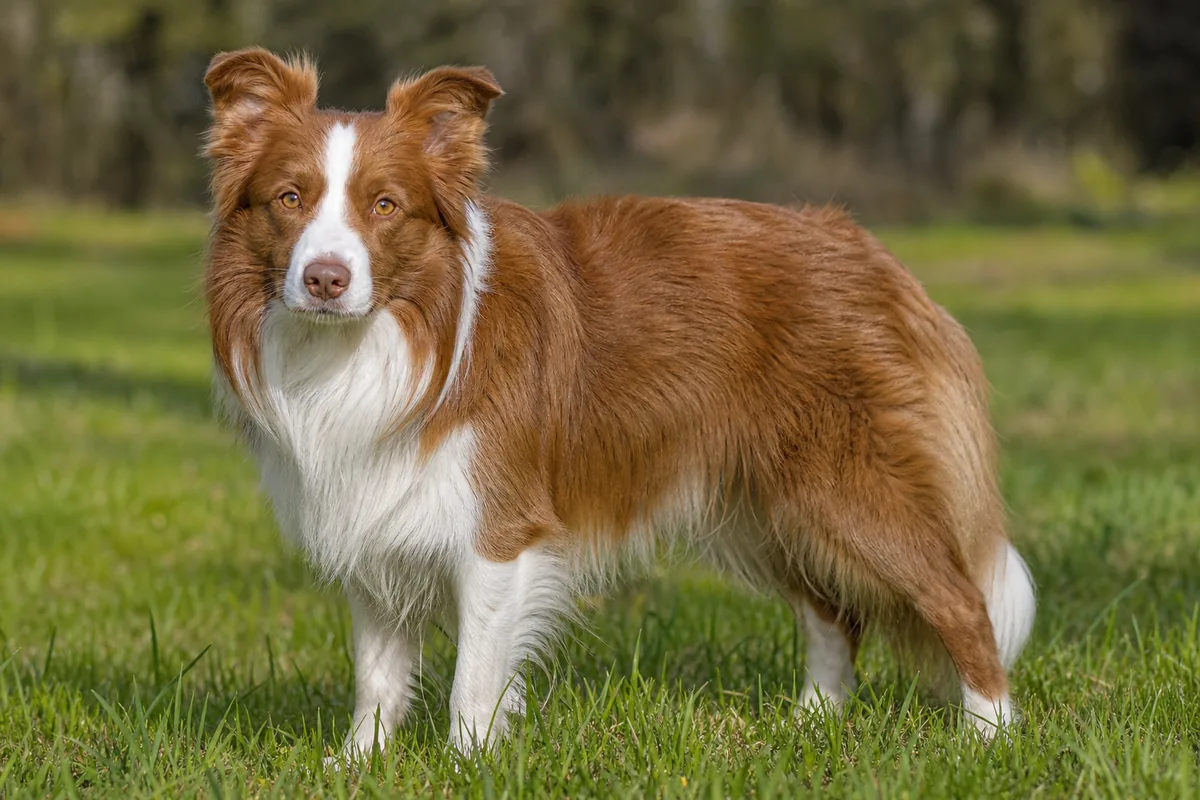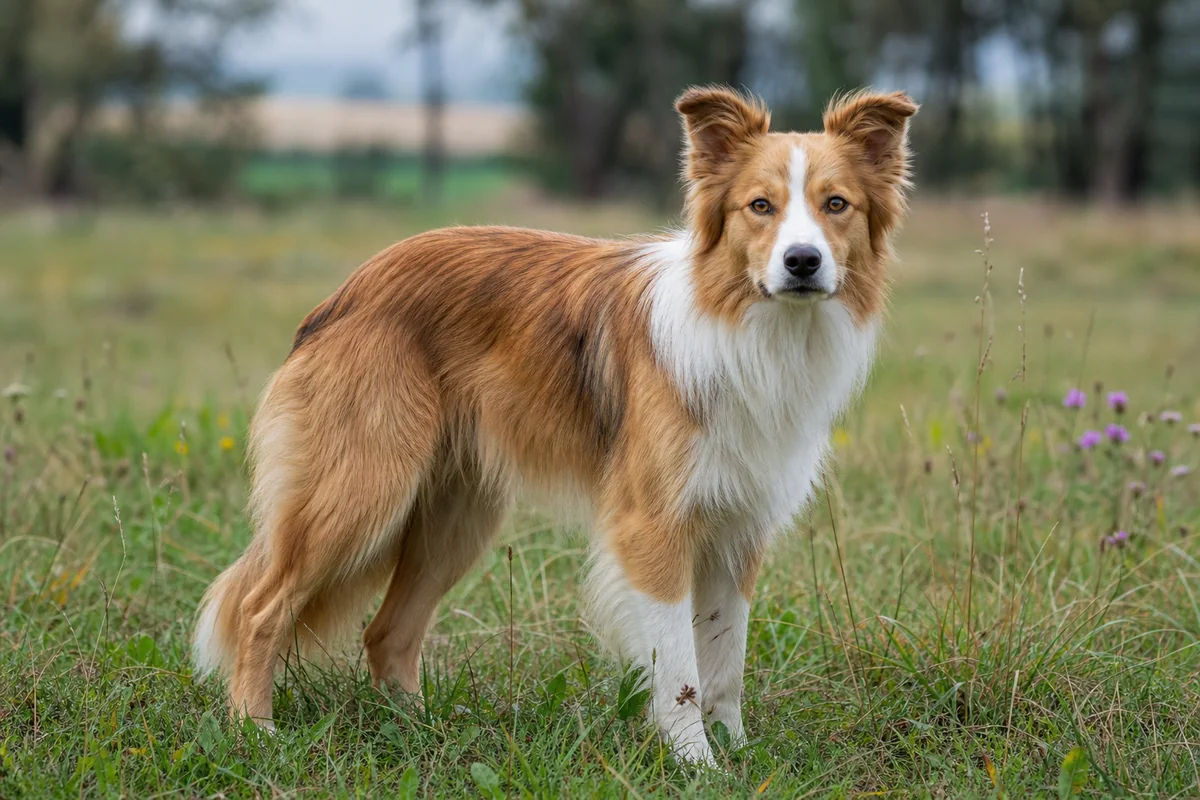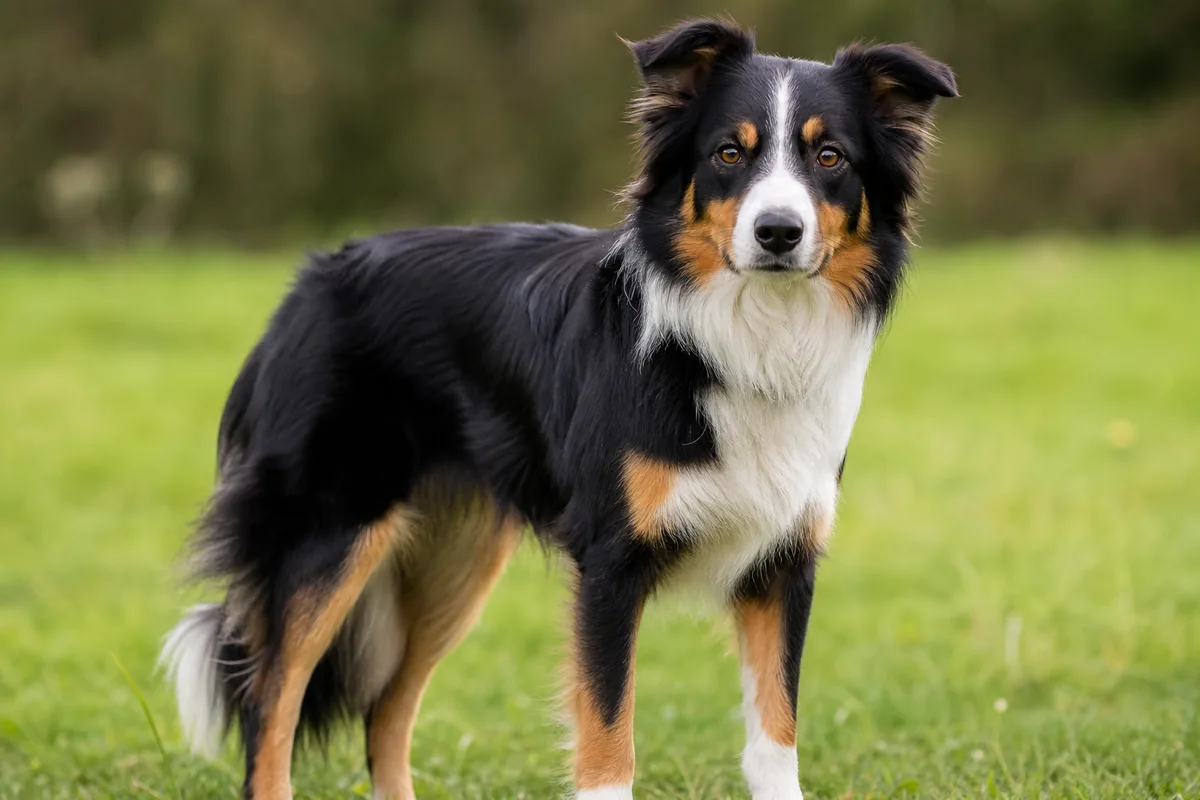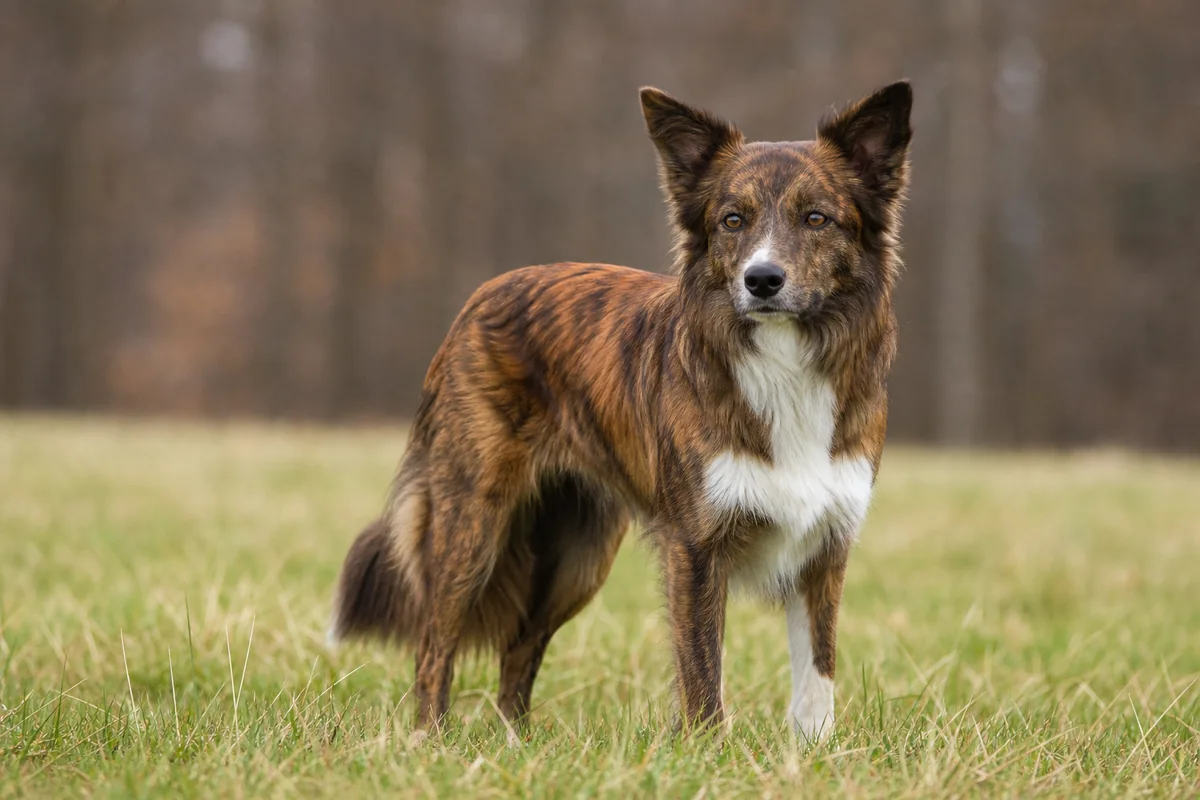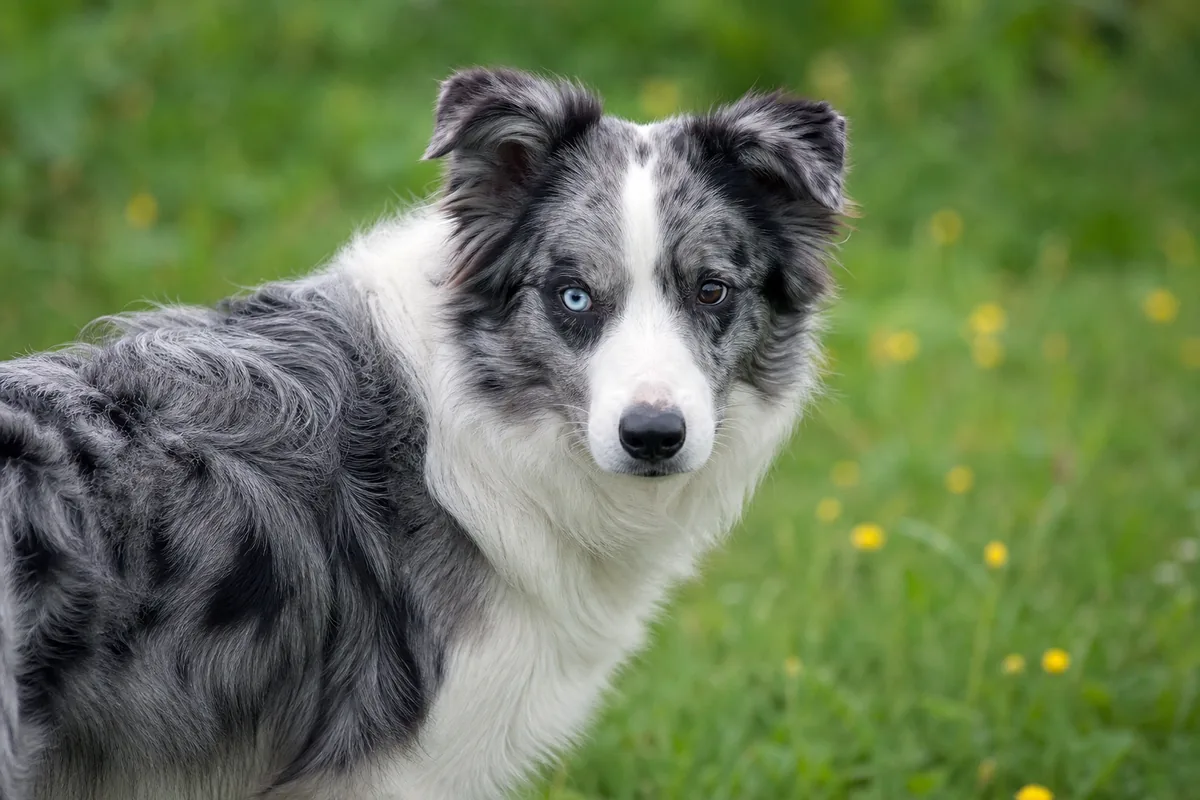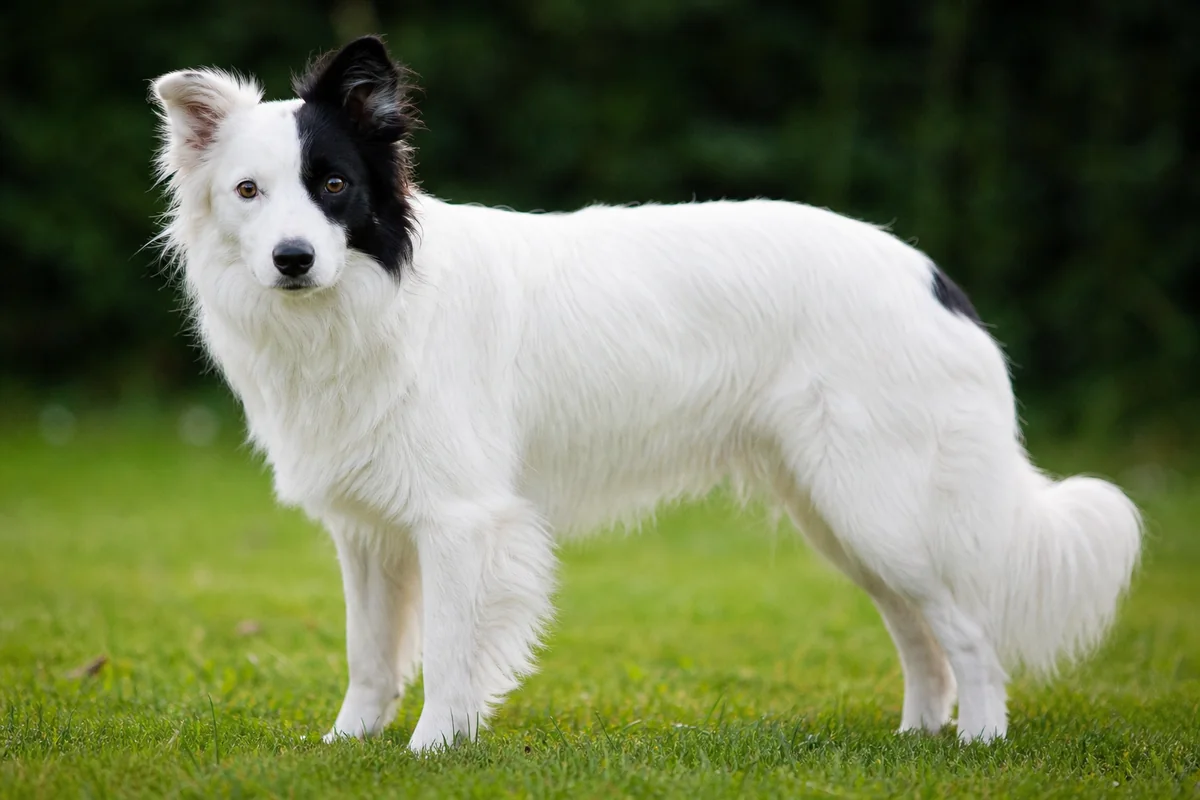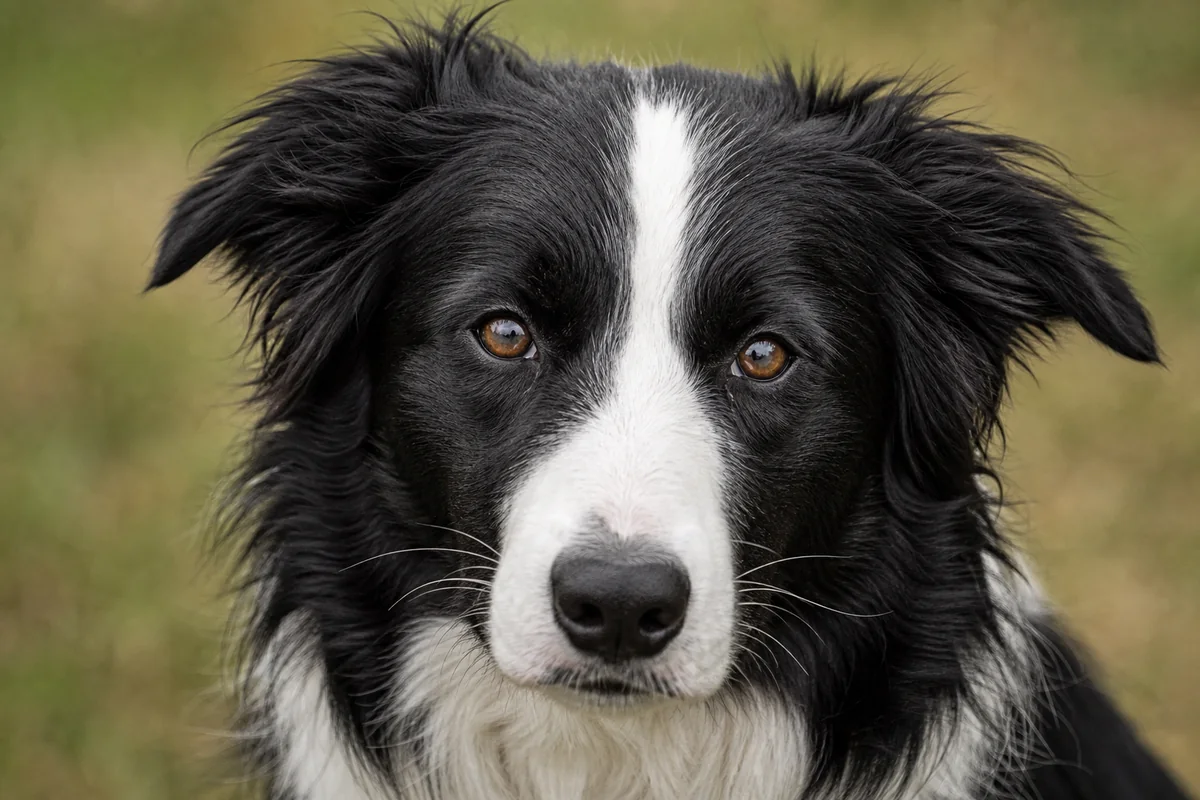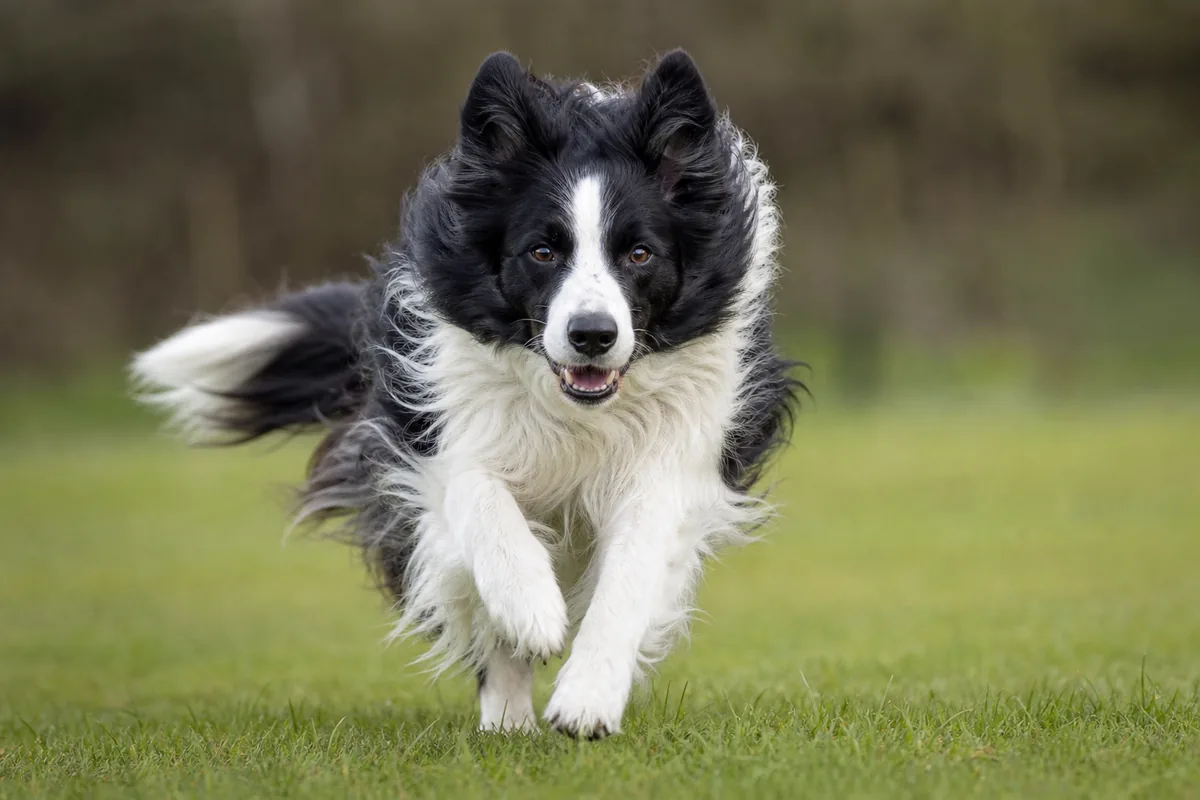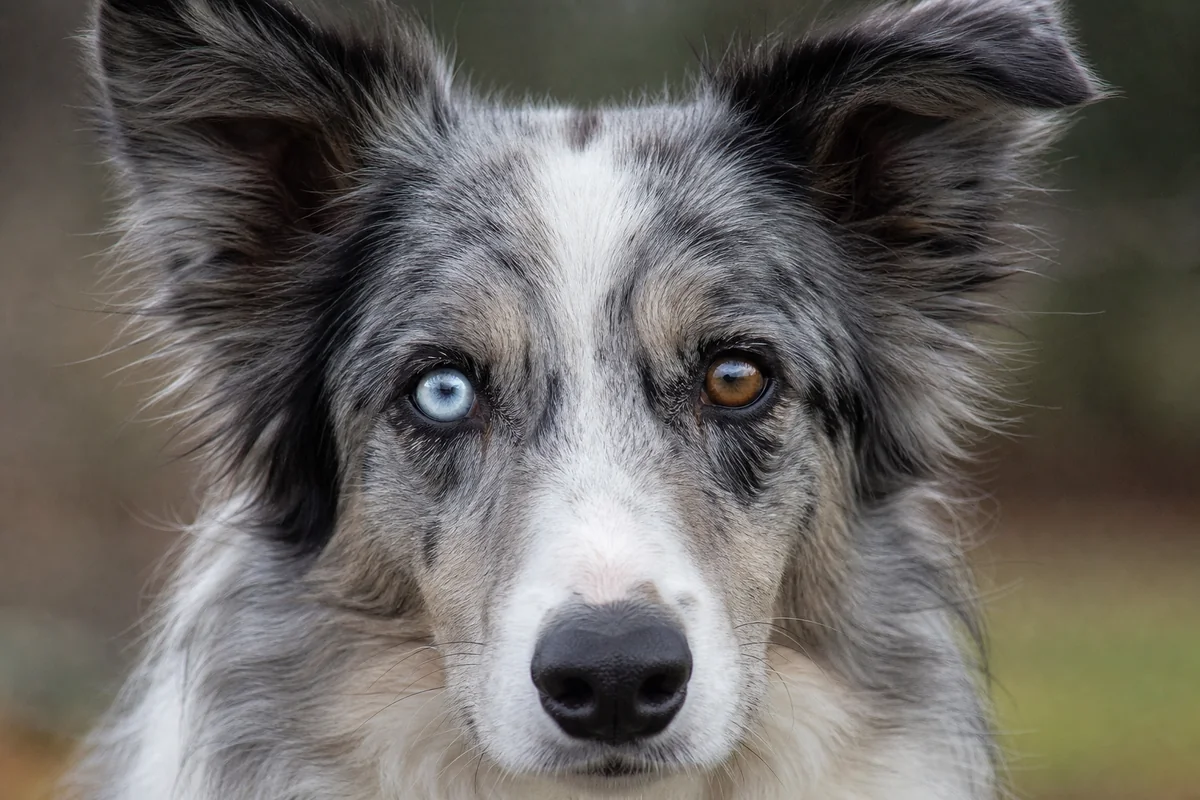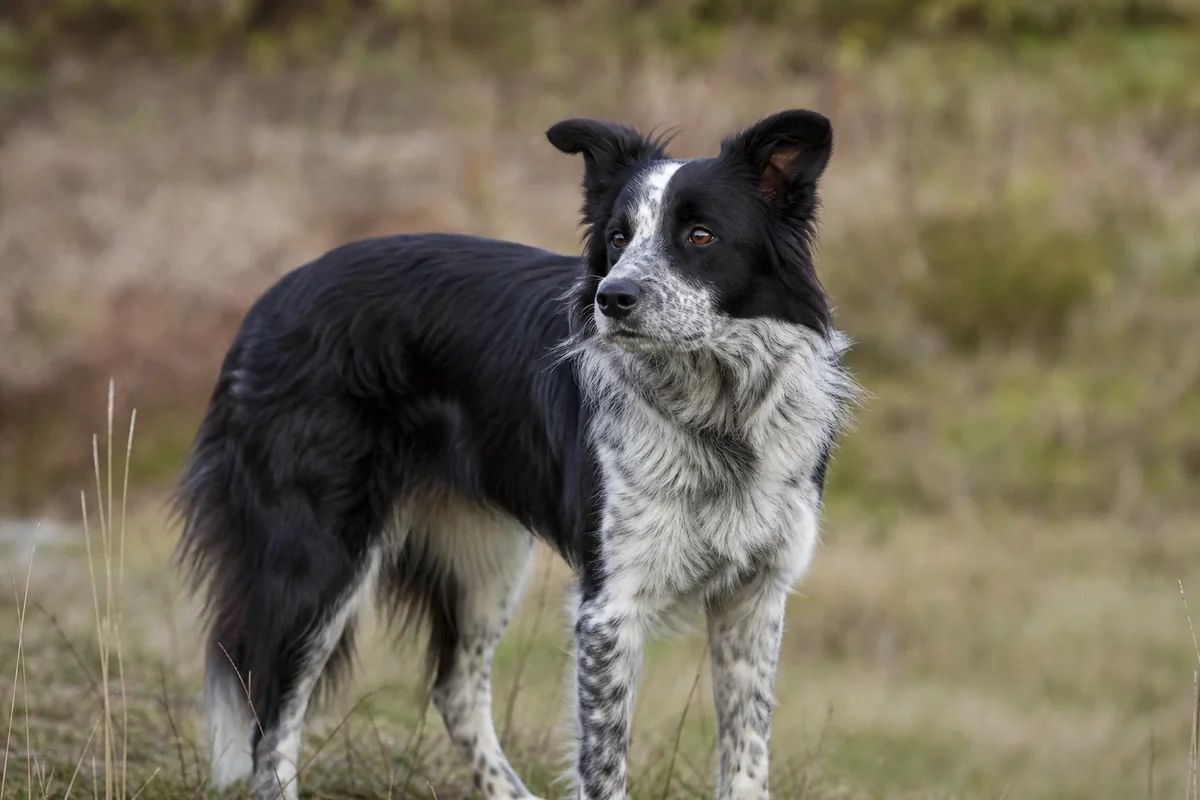
Ticking is a way to describe small areas of colour scattered through a dog’s white markings. It may look like neat freckles, a dense peppering, or a soft roan impression. Describe what is visible and keep genotype, health and character conclusions separate.
What ticking looks like
On a Border Collie, ticking is most noticeable where the underlying coat is white: the blaze, muzzle, collar, chest, socks, tail tip or white patches on the body. Individual flecks can be round, irregular or close enough together to make a larger coloured field. A light pattern may leave broad clean areas; heavier patterning can make white look evenly peppered. The base colour still matters, so a black-and-white dog, a brown-and-white dog and a blue-based dog may show different-looking flecks.
Look at the hair first. A fleck is a change in the colour of growing hair, not a spot that can be diagnosed by touching the skin. Part the coat in bright, indirect light and compare the hair near the roots with the hair tips. Skin pigment, a temporary stain, a scab or a shadow is not automatically coat ticking. The white and Irish-spotting guide helps explain why the white background is important; without a contrasting white area, the same pattern may be difficult to describe.
Ticking, roaning and the look-alikes
Ticking usually suggests separate flecks. Roaning is often used for a denser mixture in which coloured and white hairs or small marks blend into a more even impression. These words are descriptive, and people do not always use them consistently. Use both the broad term and an observation—“fine dark flecks on the front socks” is more useful than insisting on a label.
Do not use the word roan as a shortcut for merle. Merle is a different patterning process that changes eumelanic areas and can create irregular patches; the merle guide provide a separate genetics context. Wet hair, mud, plant debris, a strong backlight, cast shadow and a freshly clipped coat can also imitate flecks. A calm inspection after brushing, drying and photographing from several angles is a better comparison than one dramatic image.
What genetics can—and cannot—say
Colour discussions often call ticking a “T locus” trait. That shorthand can be useful for finding older literature, but it should not be treated as a complete prediction system or as a universal equation. A visible pattern is a phenotype; a laboratory result is evidence about selected variants in a tested sample. They answer related but different questions.
Start with the UC Davis Veterinary Genetics Laboratory basic coat-colour panel and its dog coat-colour resource to see how a professional laboratory describes tested genes, variants and limitations. A panel may not include every mechanism behind a visual description, and a result depends on the laboratory’s current validation, breed scope, sample quality and reporting language. Never turn a photo, a nose colour or a family nickname into “T/T” without documented evidence. Conversely, do not assume that a result will predict how dense, evenly distributed or attractive a dog’s flecks will look.
Why puppies change
Many puppies show little contrast at birth. As the coat grows, white hair lengthens, coloured hairs become easier to separate, and previously subtle flecks can become visible. A puppy may therefore look cleaner at eight weeks and more peppered after a later coat change. That is an observation about development, not proof that every white area will fill in or that the adult pattern can be forecast from one early feature.
Keep dated photographs in the same natural light: a full side view, both profiles, the face, each leg and any area that is changing. Note whether the coat was wet, brushed, trimmed or shedding. The coat-types guide explains why rough, smooth and intermediate coats can show the same marks differently. If you need to compare skin and hair, gently part the coat; do not scrape, pluck or irritate the skin to “find” pigment.
Pedigrees, photographs and laboratory reports
A pedigree can show that relatives were described as ticked, clear, roan or heavily marked. It is useful family context, but colour terminology varies by country, registry and decade. A pedigree is not a molecular report, and a photograph is not a laboratory result. Even a sharp image can hide white hairs under a long coat, exaggerate contrast in editing, or confuse merle, shade and dirt.
When reading a report, save the laboratory name, report date, sample identifier, panel or variant version, tested locus, result wording and any “not tested” or “interpret with caution” note. Ask what the result actually establishes and what it does not. For breeding or research decisions, discuss the report with a qualified genetic counsellor or veterinarian and consider the whole dog; ticking alone should never be used to infer health, hearing, temperament, working ability or suitability.
Breed context without a value judgement
The AKC Border Collie standard permits a range of colours and markings and places emphasis on structure, movement and working character rather than a rare-looking fleck. The AKC breed overview is useful context, while its judges’ study-guide page shows why a pattern description should not be confused with an overall evaluation. Ticking is not a promise of quality, a health status or a temperament type.
Practical care while you observe
Flecks do not require harsh colour products or aggressive grooming. Use a brush suited to the coat, check for burrs and mats, and follow professional coat-care guidance such as VCA’s grooming and coat-care advice. If a mark is raised, crusted, painful, itchy, bleeding or changing as skin rather than hair, stop treating it as a colour question and ask a veterinarian. The Merck Veterinary Manual’s dermatology diagnosis overview explains why skin findings need clinical examination.
FAQ
What is ticking?
It is a visual description for small coloured flecks distributed through areas that otherwise appear white. Fleck size, spacing and density vary. The word describes appearance; it does not by itself identify a genotype or predict an adult pattern.
Is roaning the same as ticking?
Not necessarily. People commonly use ticking for discrete marks and roaning for a more densely mixed impression, but usage overlaps. Describe the location, hair colour, density and date as well as choosing a label.
Can a newborn nose predict adult ticking?
No. Nose leather is not a reliable forecast of how the coat will develop. Adult visibility can change with hair growth, shedding, coat texture, light and grooming. Keep a dated photo record instead of making a prediction from one newborn feature.
How can I tell ticking from merle, dirt or shadow?
Dry and brush the coat, inspect in even natural light, look at several angles and compare the hair with the skin without irritating it. Merle produces a different kind of patching, while dirt and shadows move or disappear. If the distinction matters, a photograph alone may be insufficient.
Can a pedigree prove a ticking genotype?
No. A pedigree records reported ancestry and labels, which may be inconsistent. It can support family context but cannot replace a current laboratory report that states its tested variants and limitations.
Does ticking predict health, hearing, temperament or ability?
No. A coat pattern is not a temperament, performance or clinical test. Do not infer hearing, health, trainability or suitability from flecks or roaning. Evaluate those questions with appropriate veterinary, behavioural or working evidence.
Sources for a careful reading
For current terminology, compare the AAHA guide to shedding with the professional and breed sources linked above. Check publication dates, panel updates and the exact wording of any test. The goal is not to force every dog into a pattern box; it is to make an accurate observation, preserve uncertainty and use specialist evidence when a real decision depends on it.